Anish Kapoor, colour, perception and the future of fashion
What can contemporary art tell us about the future of fashion and textiles?
Trend forecasting is often associated with runway collections, colour palettes, materials, consumer behaviour and market data.
But there is another essential field of research: contemporary art.
Art can reveal cultural sensitivities, emotions and ways of perceiving the world before they become visible as commercial trends.
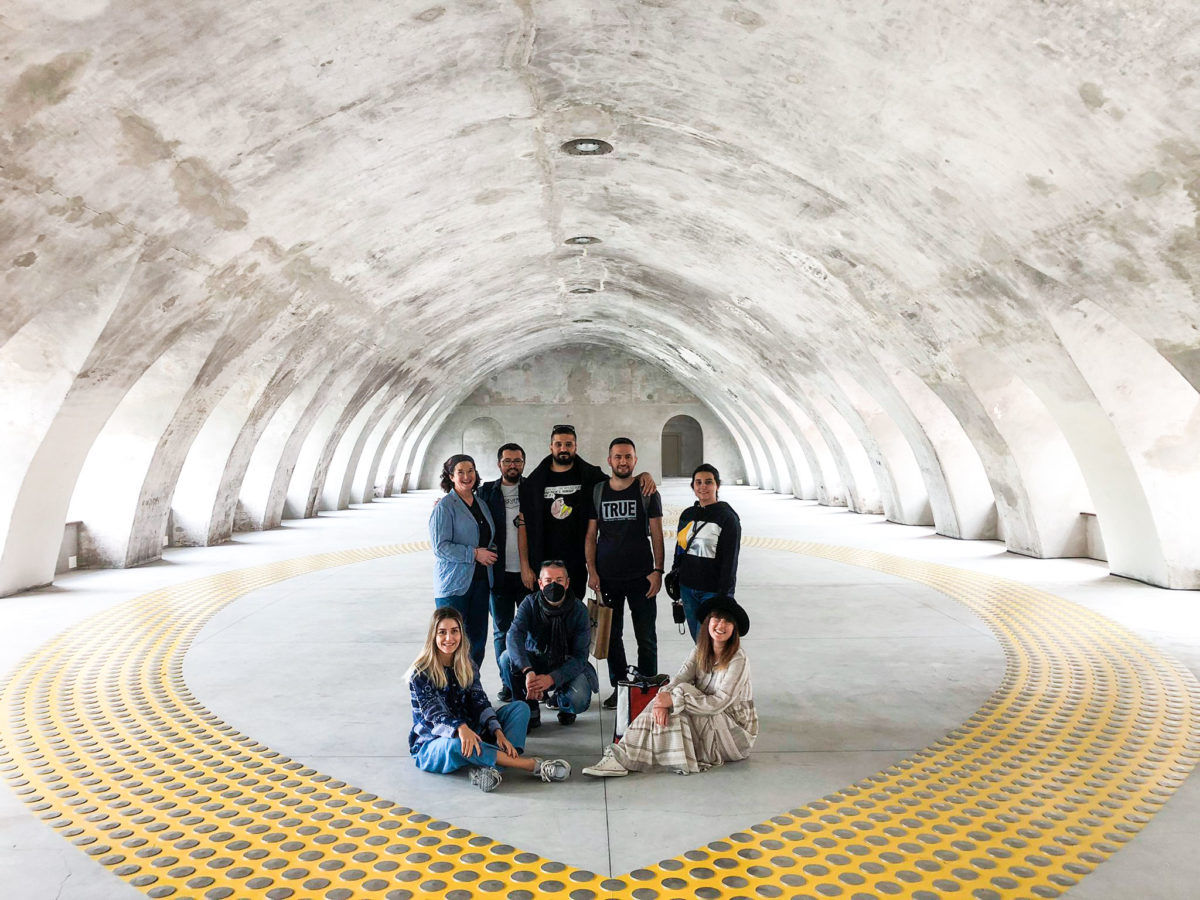
During a recent visit to Anish Kapoor’s exhibition at London’s Hayward Gallery, this idea became particularly tangible.
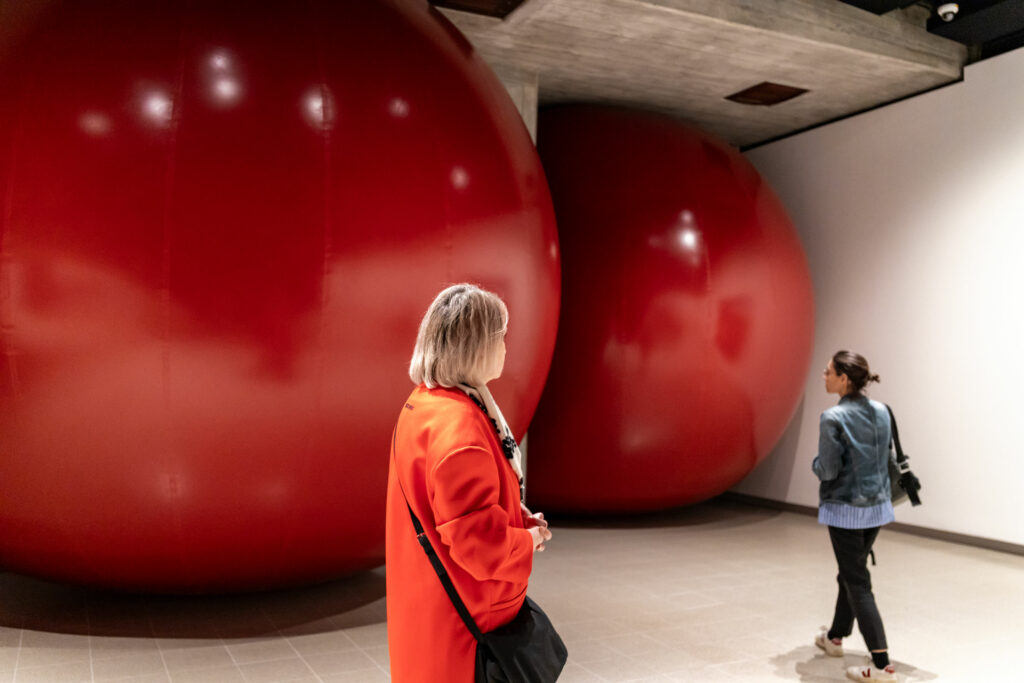
We expected to see sculpture. Instead, we experienced colour, space and material almost physically.
Three elements stayed with us: red, reflection and void, and each of them suggests a different direction for fashion and textile research.
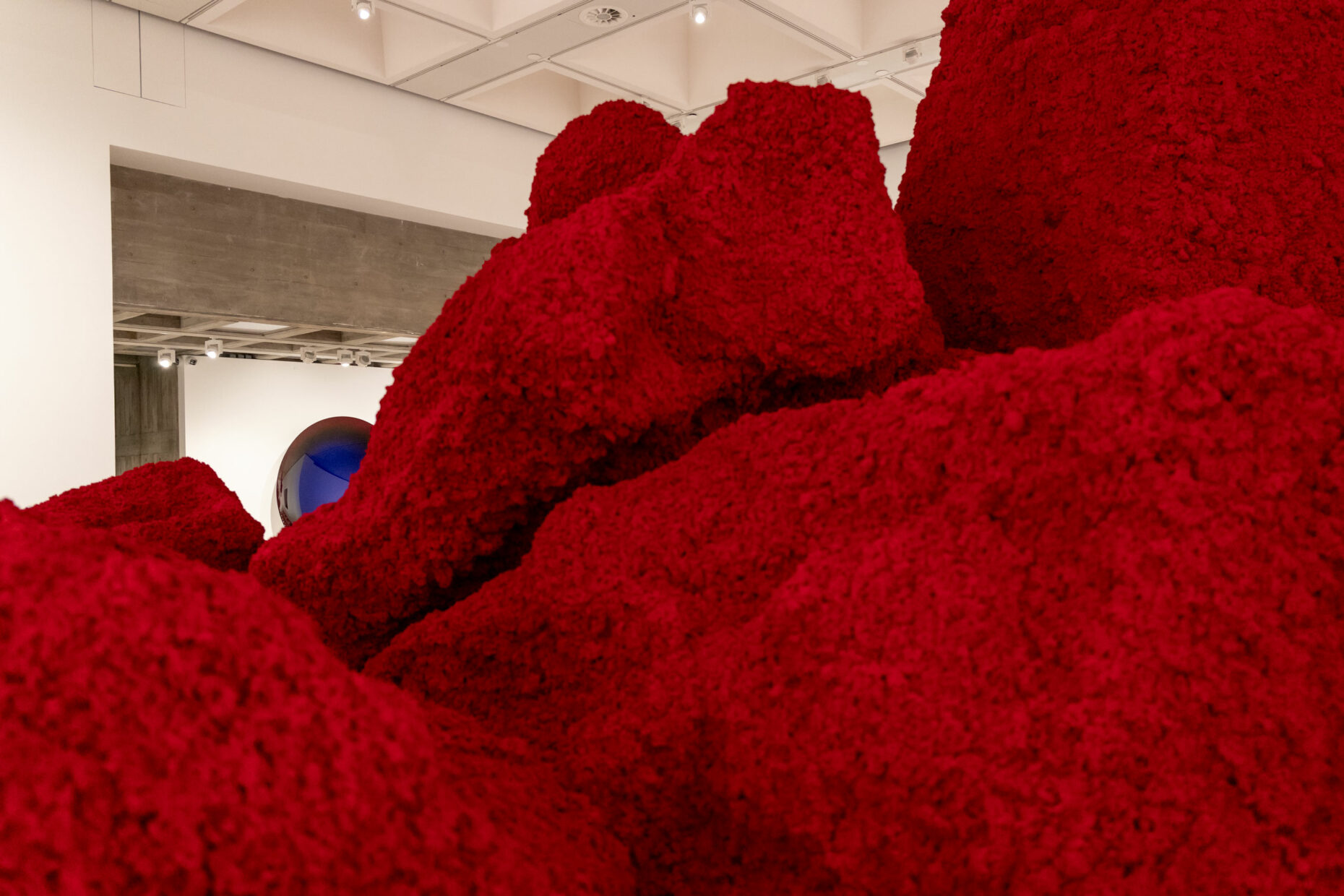
Red: colour as experience
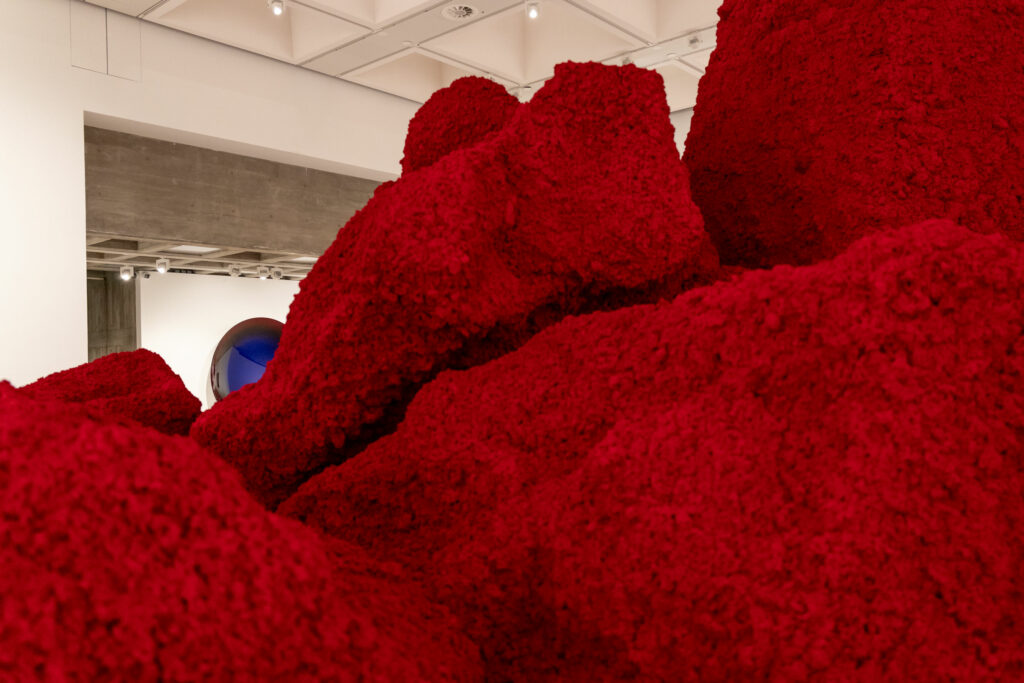
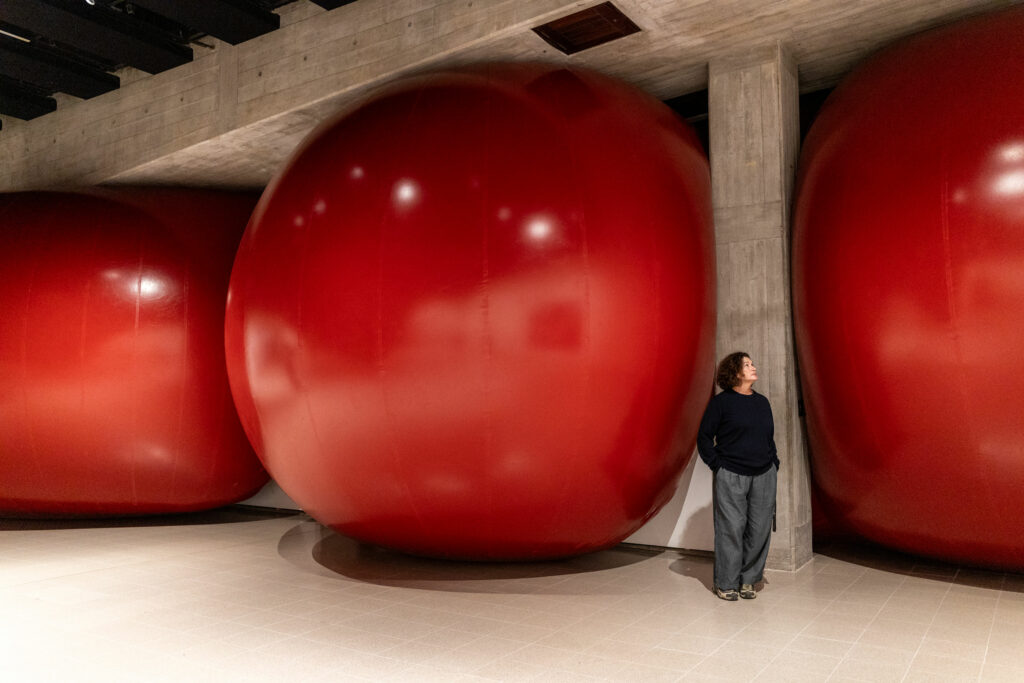
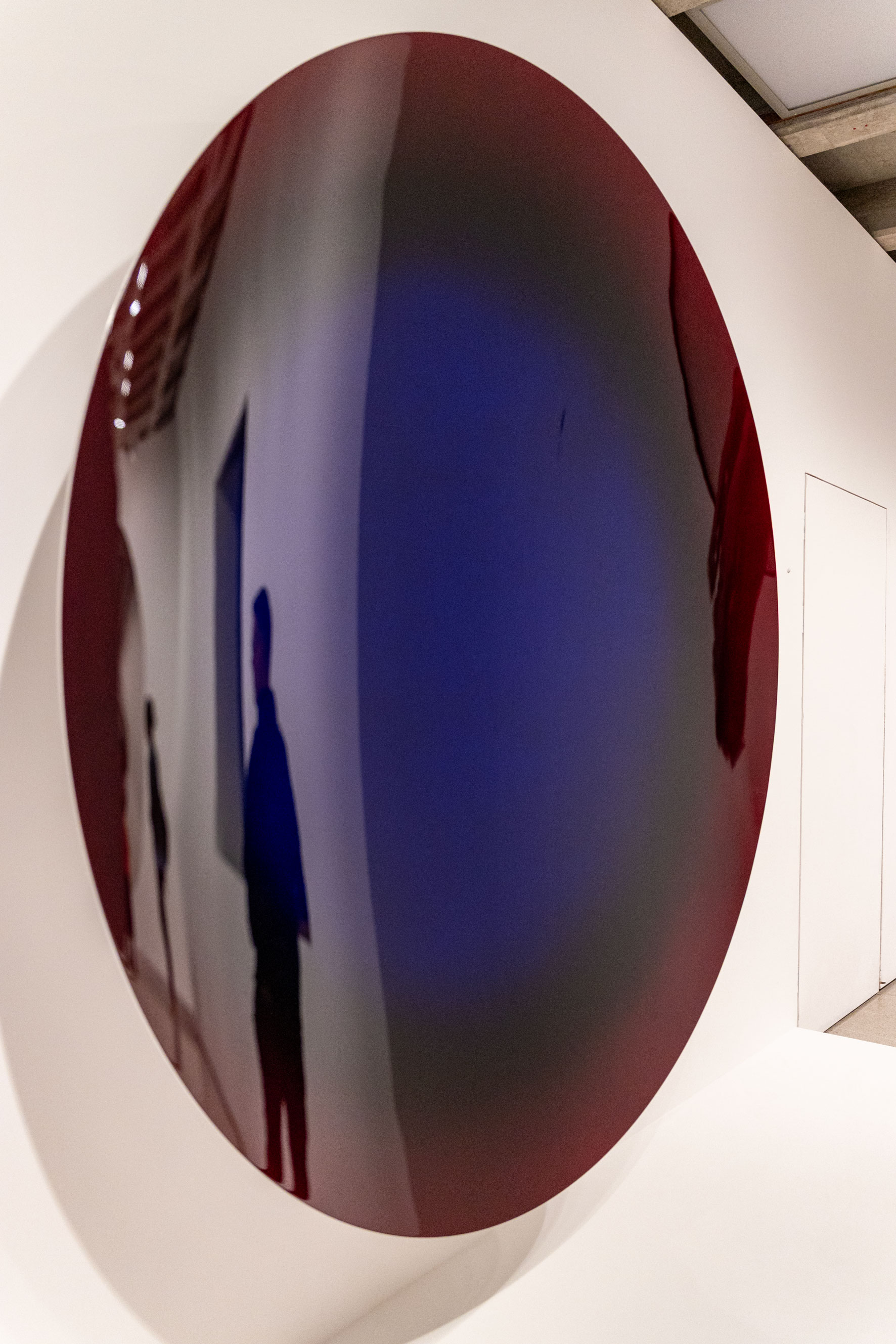
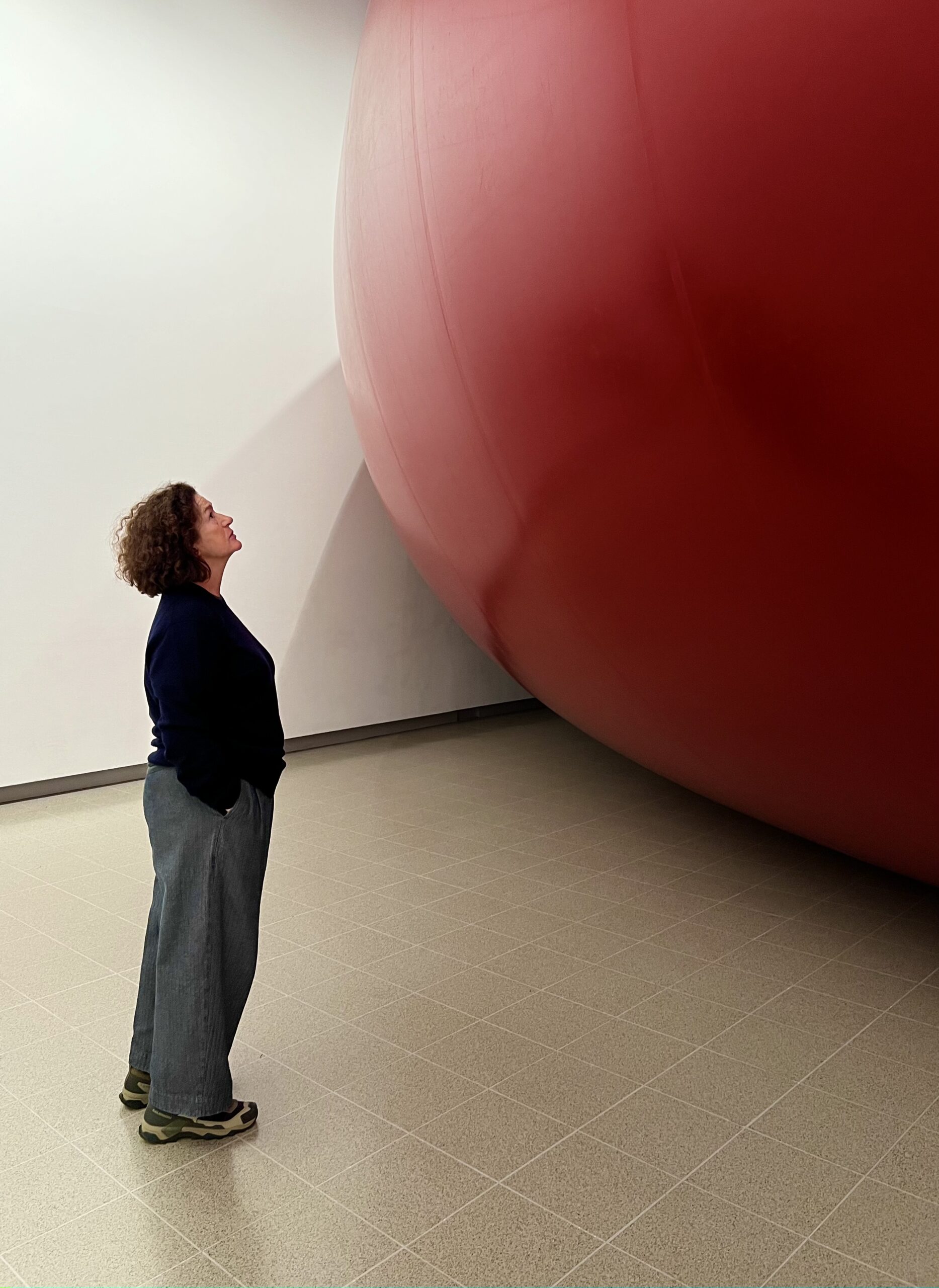
Kapoor’s red is not decorative: it feels physical, visceral and almost organic. His use of red has often been connected to the body, the earth and the interior of matter.
This raises an interesting question for colour research: What if colour is not simply something we see, but something we experience?
In fashion and textiles, this can translate into research around pigment intensity, saturation, opacity, tactility and the relationship between colour and light.
The signal is that Red is back, not just as a color, but also as an experience.
Mirror: when reality becomes unstable
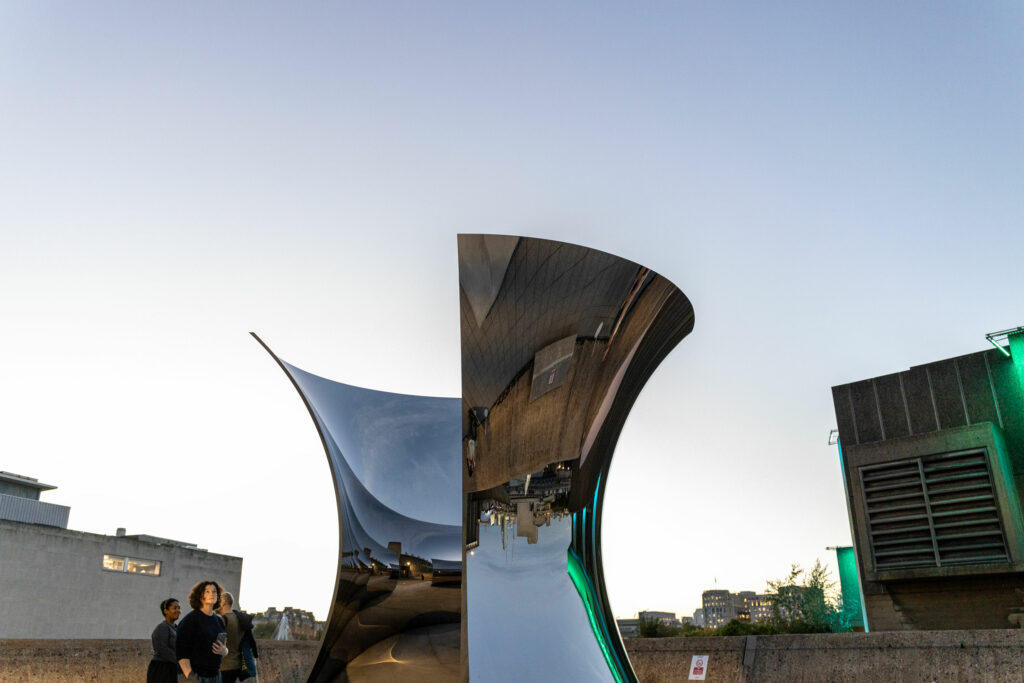
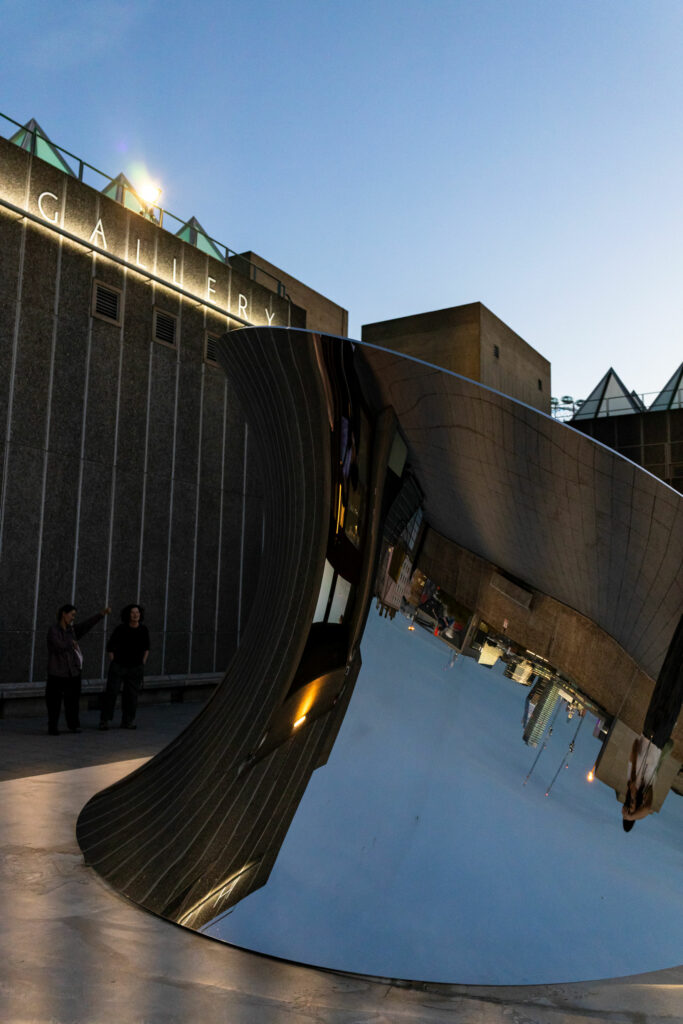
Kapoor’s mirrored surfaces do not simply reflect the viewer, they distort.
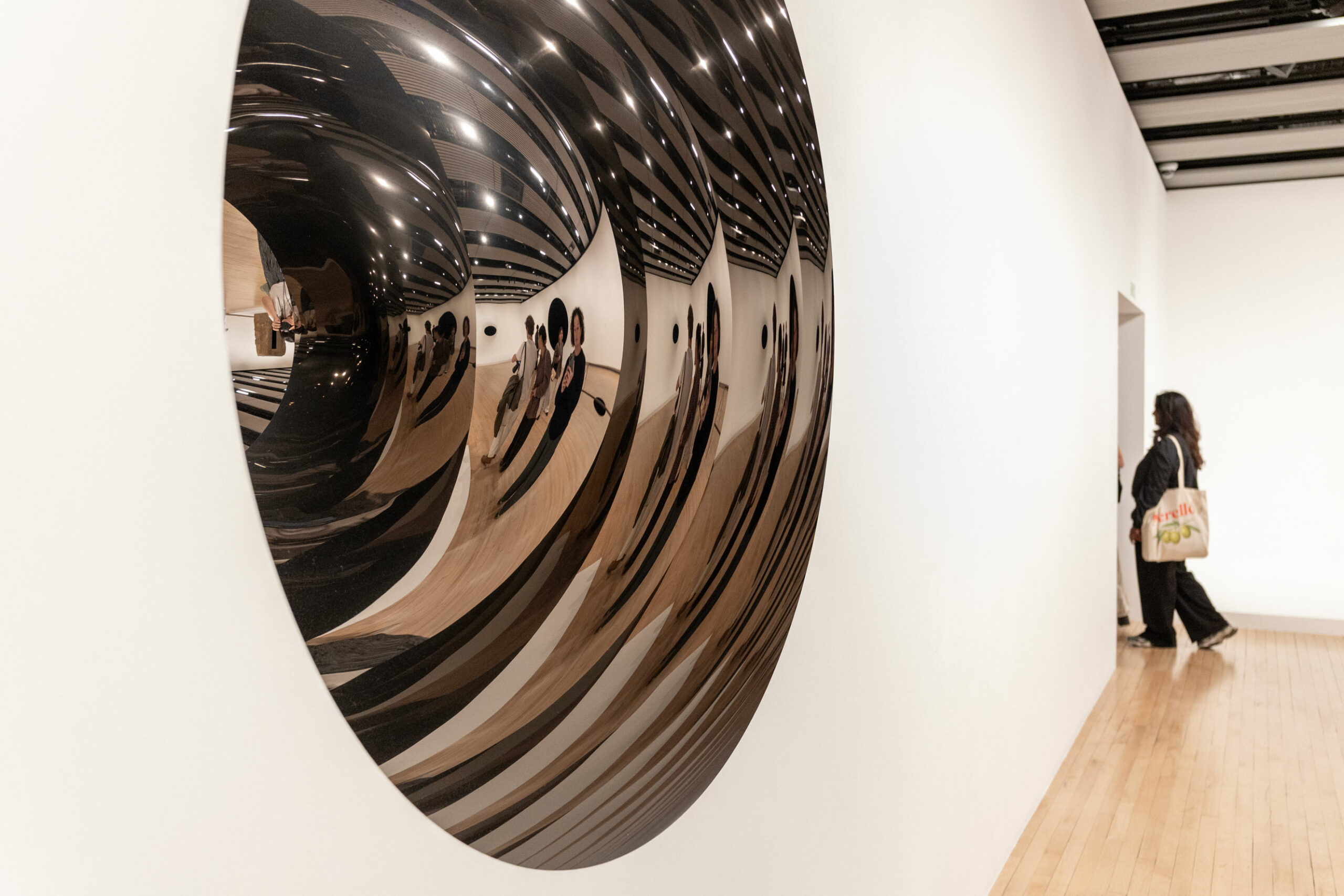
Concave and convex forms alter scale, proportion and space. We recognise ourselves, but the image no longer confirms what we know. This becomes particularly relevant in a culture increasingly shaped by screens, filters, digital identities and constantly changing representations of the self.
For fashion, the connection is immediate: reflective and iridescent textiles, metallic surfaces, transparency, optical effects and fluid silhouettes can all challenge our perception of the body.
The question becomes: what if a surface does not reflect reality, but questions it?
Here, material becomes an active part of the experience rather than simply a visual finish.
Void: the power of absence
The black works are perhaps the most disorienting.
Kapoor’s exploration of the void, together with works using Vantablack, a material capable of absorbing almost all visible light, creates the sensation of looking into something that has no measurable depth.
The object is there but, visually, it almost disappears and matter becomes absence.
This opens another direction for fashion research.
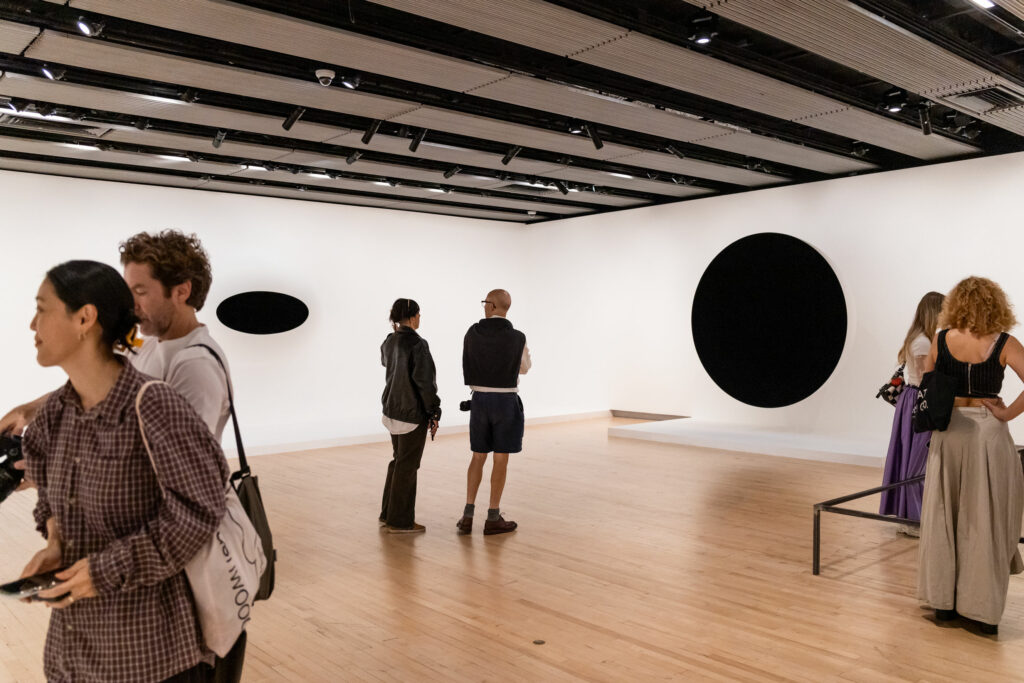
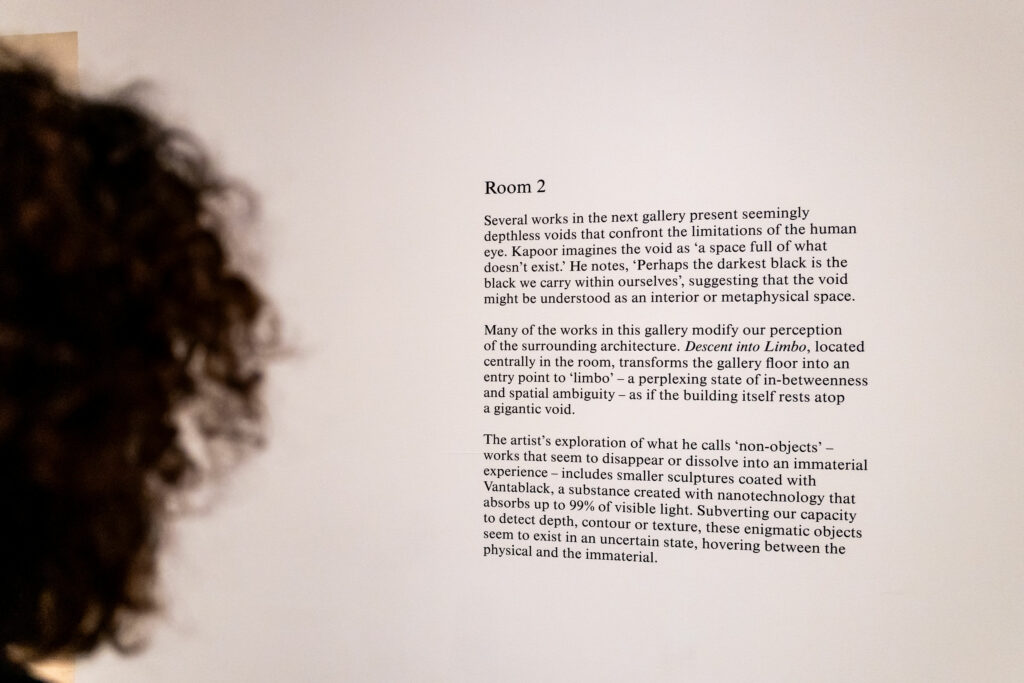
What happens when we remove rather than add? When a surface absorbs instead of reflects? When black becomes not simply a colour, but a material condition?
Ultra-matte surfaces, deep blacks, negative space, concealment and sculptural silhouettes can all be read through this lens: the aesthetics of absence.
Three signals, one cultural question
Red, mirror and void seem completely different. One is intensely present. One reflects. One absorbs.
Yet they share something important: they make us feel rather than simply look.
This is where contemporary art becomes relevant to trend forecasting. The objective is not to transform a Kapoor sculpture into a fashion collection: It is to understand the principles behind the visual experience.
- RED > FEEL Colour, intensity, sensuality, physicality.
- MIRROR > QUESTION Reflection, distortion, identity, transformation.
- VOID > IMAGINE Absence, mystery, darkness, sensory reduction.
These are not trends. They are cultural signals.
Look beyond fashion
Fashion does not evolve in isolation. Its future is connected to art, architecture, technology, photography, music and changing social behaviours.
- The runway shows us what the fashion system is proposing.
- The street shows us what people are adopting.
- Art can reveal what people are beginning to feel.
For fashion and textile professionals, this is why cultural research matters.
A colour, a material or a silhouette becomes more meaningful when we understand the cultural context that makes it relevant. Our visit to Kapoor’s exhibition reminded us that trend forecasting is not simply about predicting what people will wear next.
It is about understanding what they are beginning to feel, desire, question and experience.
LOOK BEYOND FASHION: the future of fashion may already be visible somewhere else.
Want to dive deeper into fashion insights?
In our latest articles, we’ve explored in detail the power of trends, artisanal practices and much more. To learn more, click on these links:
From the street to the trend report: observing weak signals in fashion
Antwerp: The power of creative fashion identity
The soul in the weave: Batik and the new renaissance of craftsmanship in high fashion
Hand-Loom Weaving: materiality as a modern luxury
Craft in the fashion industry: Tradition, Innovation, Future
Sources & further reading
- Southbank Centre. Anish Kapoor, Hayward Gallery, London, 2026. https://www.southbankcentre.co.uk/whats-on/anish-kapoor/
- Southbank Centre. Ralph Rugoff on Anish Kapoor. https://www.southbankcentre.co.uk/magazine/dont-believe-your-eyes-ralph-rugoff-on-anish-kapoor/
- Anish Kapoor. In conversation with Heidi Reitmaier. https://anishkapoor.com/177/in-conversation-with-heidi-reitmaier
- Anish Kapoor. In conversation with Marcello Dantas. https://anishkapoor.com/178/in-conversation-with-marcello-dantas
- The Guardian. Anish Kapoor at Hayward Gallery, 2026. https://www.theguardian.com/artanddesign/2026/jun/15/anish-kapoor-review-hayward-gallery
Who I Am
Welcome in Meidea Diary.
I am Lucia Rosin, the founder and creative director of Meidea, a creative consultancy based in Italy that collaborates with global brands.
I am a passionate sustainability advocate, traveler, photographer, and vintage collector, and I infuse all of these aspects into every single project I work on.
With a long career as a creative consultant, I have distinguished myself for my ability to blend innovation and tradition.
I work closely with companies in the textile and apparel sectors to develop new products, strategies and design concepts.
Enjoy reading the Meidea Blog and deepen your understanding of the ever-evolving fashion industry to predict and implement future design changes.
Lucia Rosin