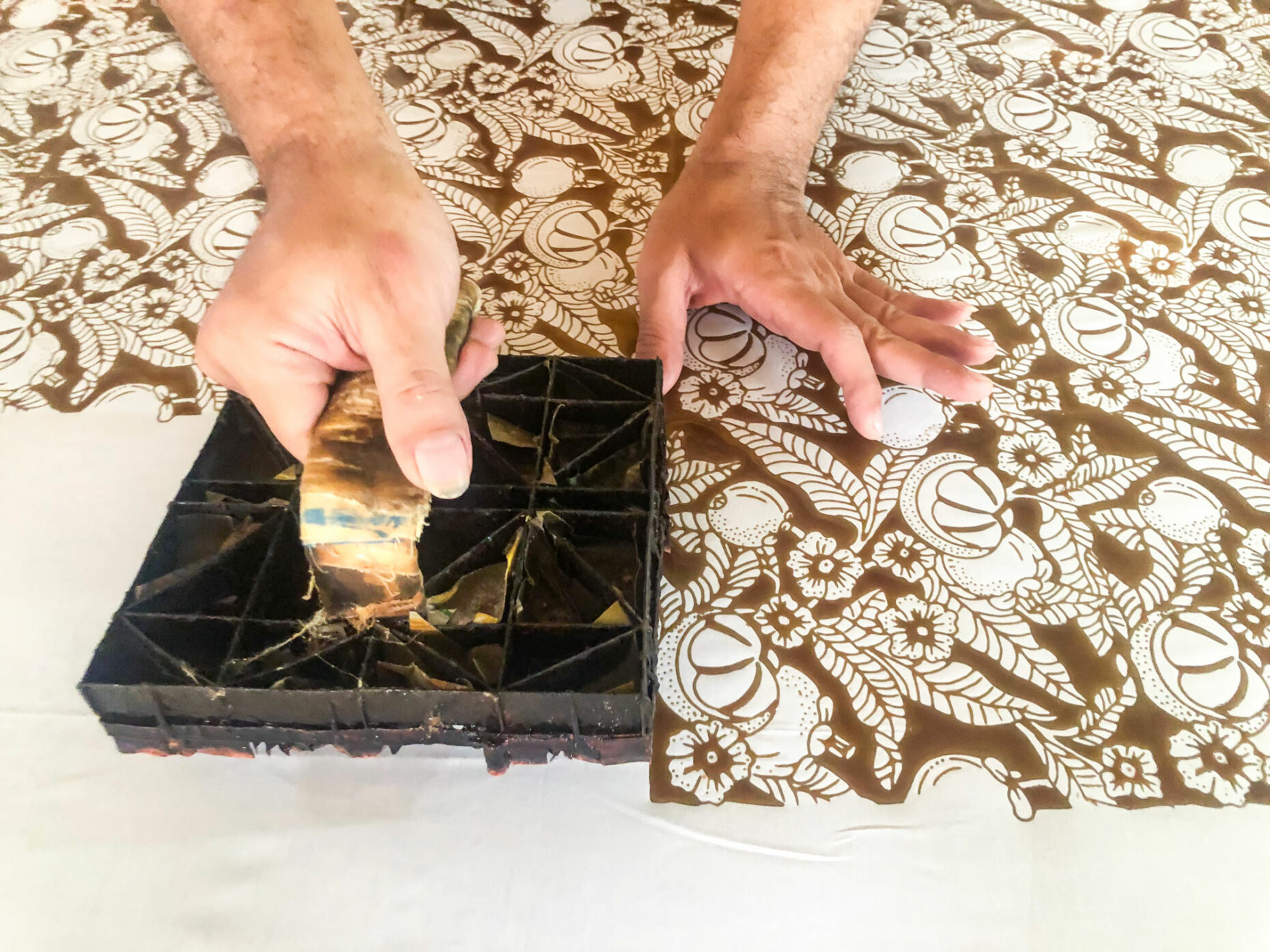
The art of reserve is between artisan tradition and avant-garde fashion
In a world dominated by algorithms and mass production, high fashion is experiencing a revolutionary return to its roots. It’s no longer just a matter of logos, but of stories. The contemporary customer no longer seeks a “perfect” dress, but a garment that expresses themselves, a unique piece capable of conveying authenticity. In this scenario, ancestral techniques like Batik are emerging as the new alphabet of luxury, transforming every fiber into a manifesto of character and tradition.
Identity as a new luxury
The shift is clear: from ready-to-wear to ready-to-express. The end consumer seeks an emotional connection with what they wear. They want to know where the fabric comes from, who touched it, what culture it represents. Batik, with its slow ritual and manual complexity, responds precisely to this need for identification. Wearing a batik pattern today means donning an identity that cannot be replicated by an industrial printer.
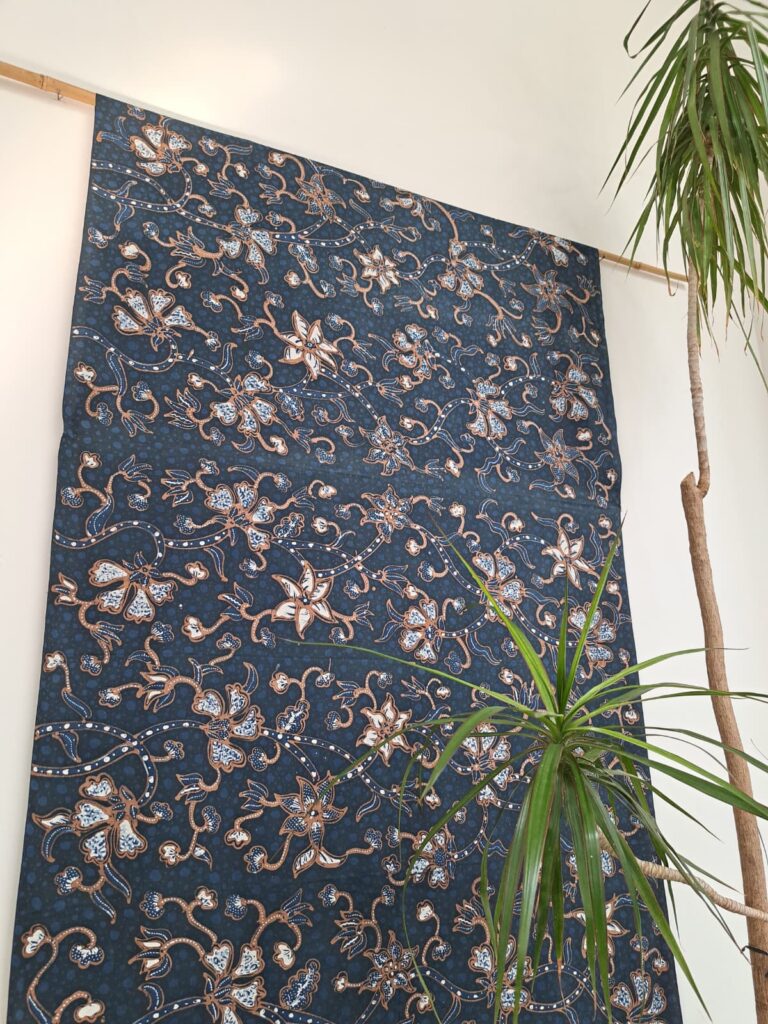
Batik: The human mark on fabric
Why Batik? Because it is the emblem of the “handmade” that defies time. The technique, which relies on the use of hot wax as a reserve before dyeing, embodies an element that the industry has tried to erase for decades: unpredictability.
- The Uniqueness of Error: The crackling effect (the subtle veins of the cracking wax) is like a fingerprint. No two meters of fabric are identical.
- Tactility as a Value: To the touch, a true Batik retains a density and vibration that flat prints can never emulate.
- Visual Narrations: From the royal courts of Java to the villages of West Africa, each motif conveys a status, a wish, or a legend, allowing the brand to offer not just a garment, but a piece of culture.
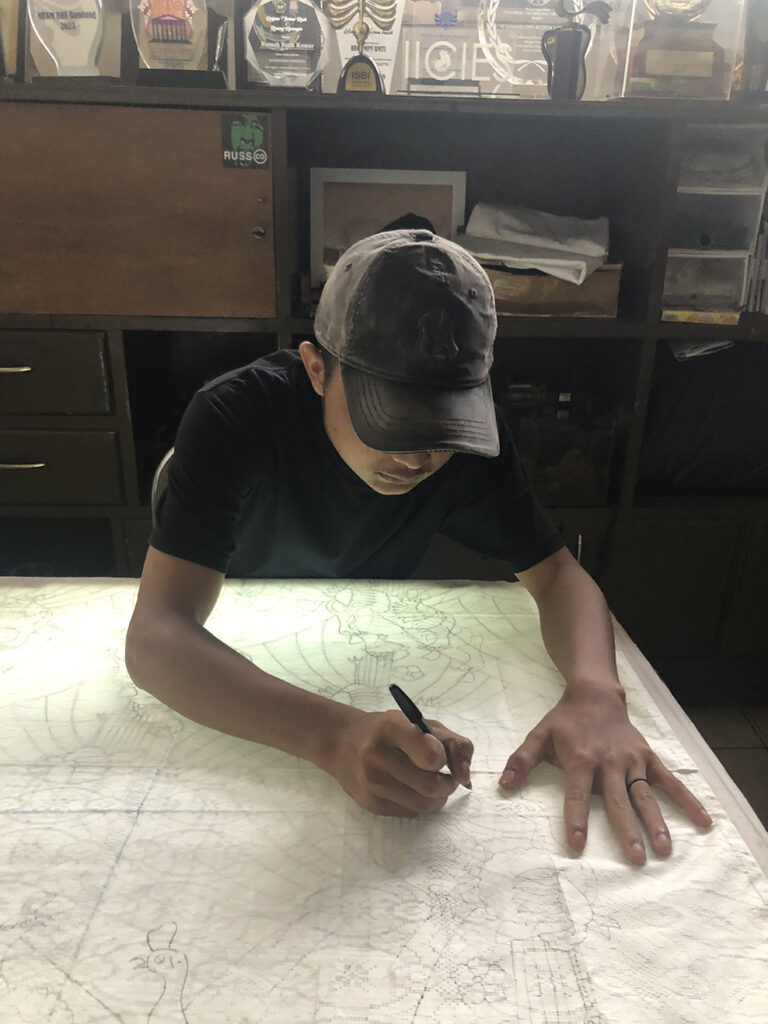
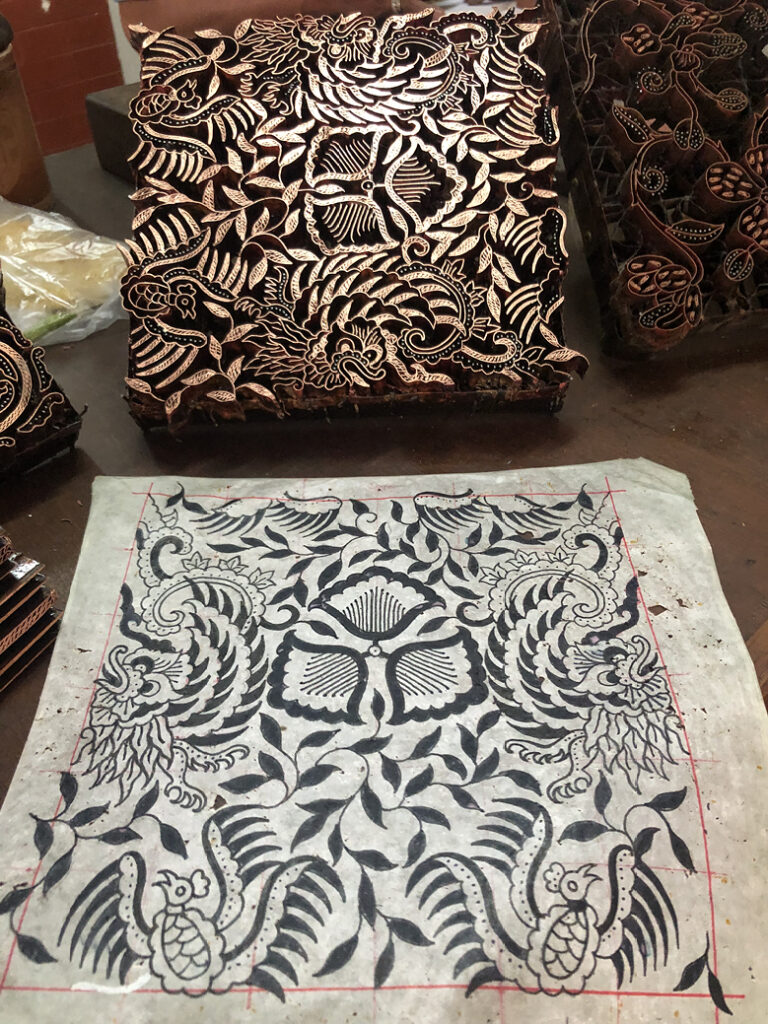
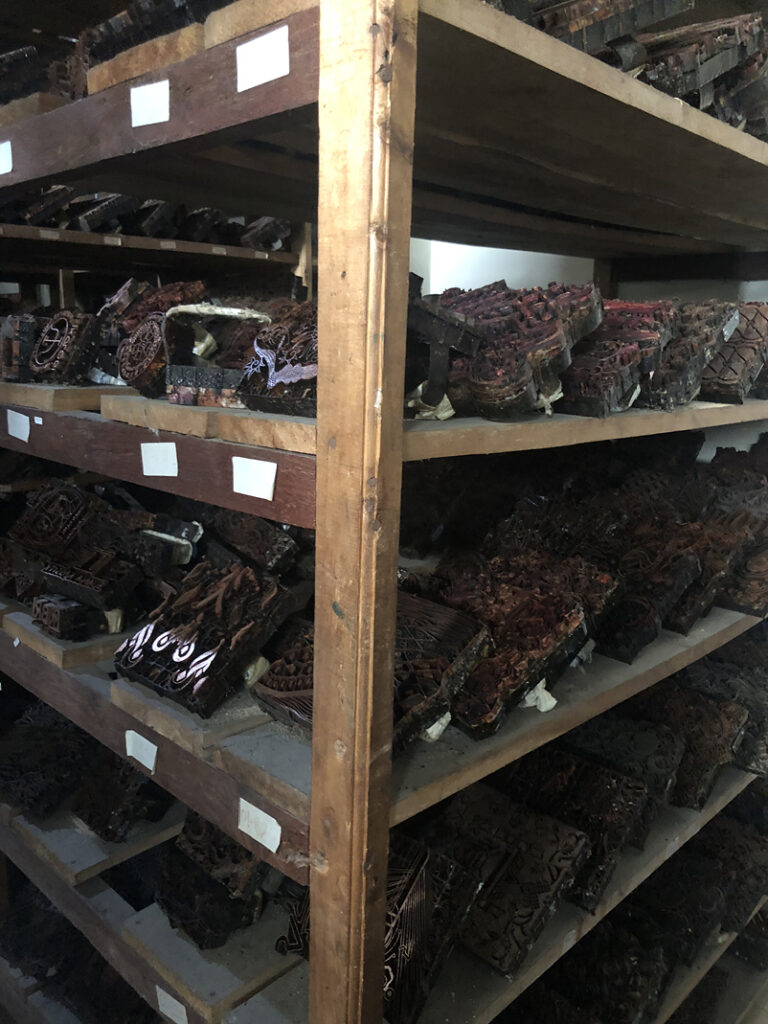
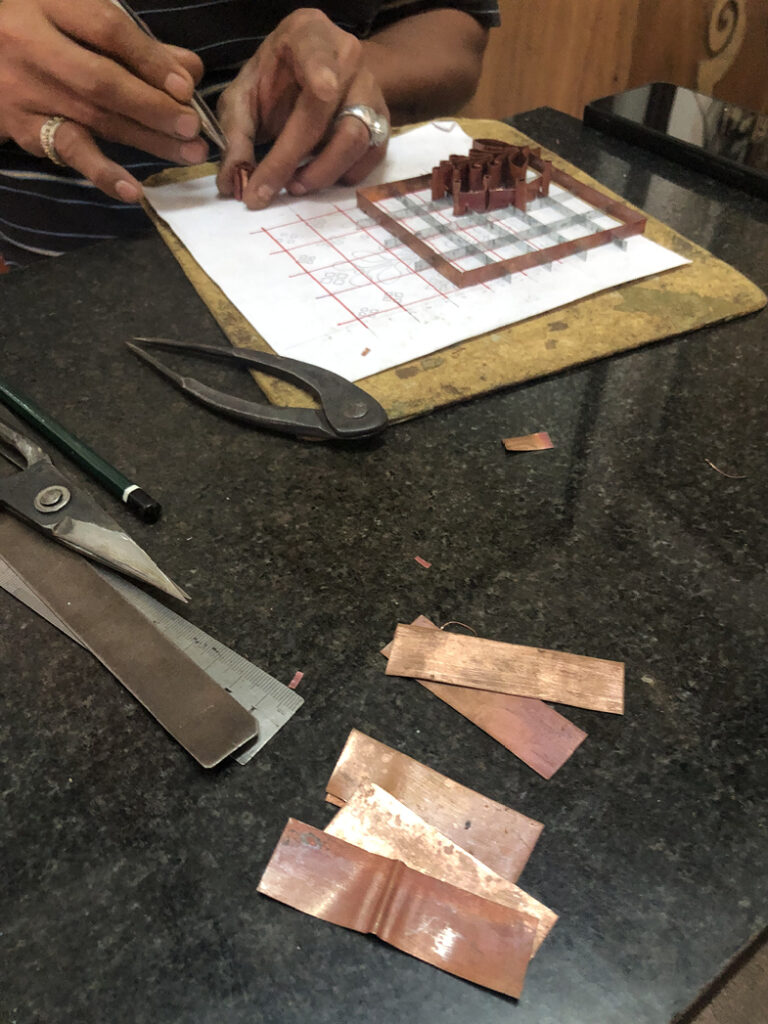
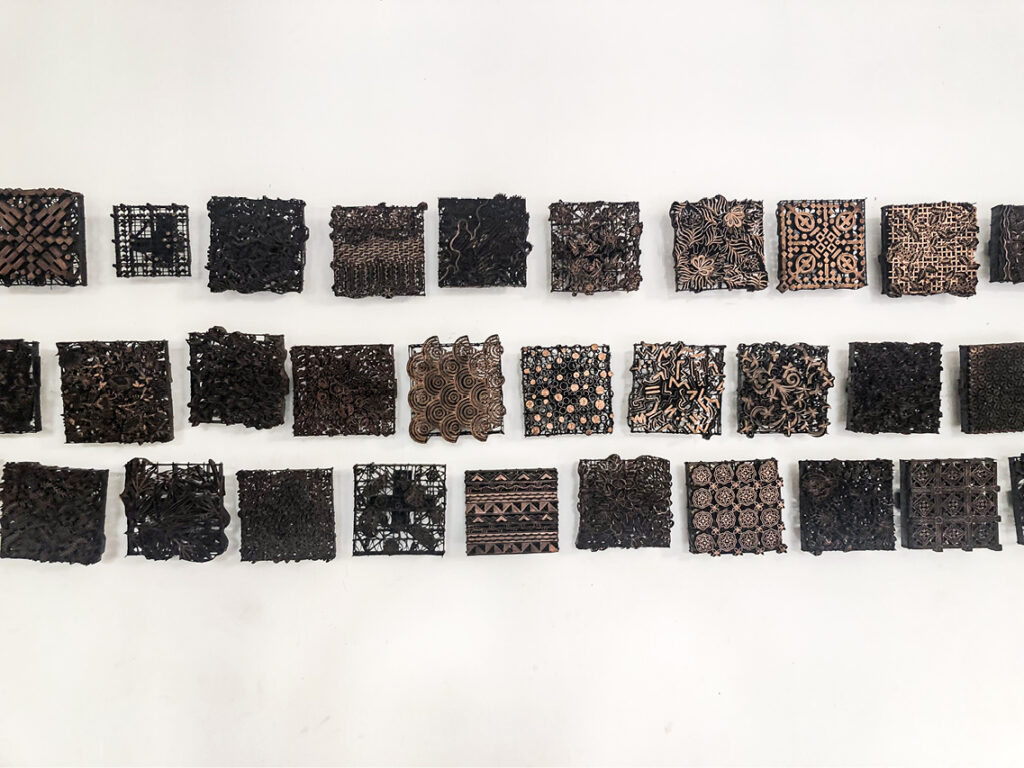
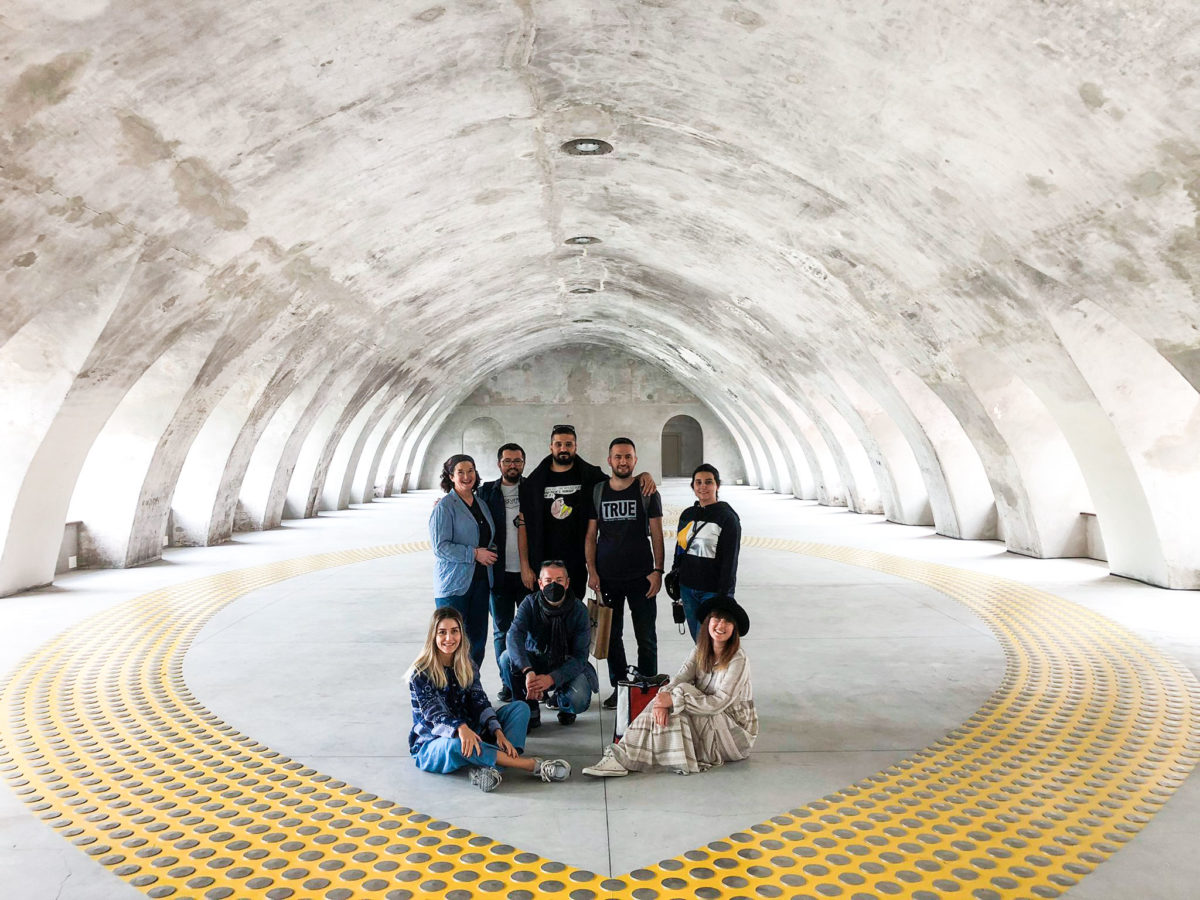
Lucia Rosin at “Rumah Batik Komar”: Batik workshop
Hybrid Workflows: Taking craftsmanship to industrial scale
The real challenge of contemporary haute couture has been to make authenticity scalable without betraying it. Major brands are adopting innovative solutions:
- Digital Craft Design: Designers begin the creative process on looms or handmade samples. These are scanned, preserving every “blemish,” and then reproduced with highly precise pigment prints.
- Jacquard Narrative: The structure of batik designs is translated into complex textile weaves, where the textured effect is achieved through interweaving threads, combining the mastery of weaving with that of hand-drawing.
Case Studies: Batik in recent collections (2021-2026)
Over the past five years, major fashion houses and independent brands have reinterpreted Batik, bringing it to new contexts:
- Dior (Uniwax Collaboration): Maria Grazia Chiuri has elevated Batik (particularly the African wax variant) to a symbol of feminism and cultural interconnection, using it to structure Bar jackets and archival skirts.
- Etro: The brand recently fused its iconic Paisley motifs with Asian-inspired reserve dyeing techniques, creating a high-end “nomadic” aesthetic for its Resort collections.
- Batik Boutique (Kuala Lumpur): A benchmark for 2025-2026, this brand has modernized the technique by applying it to urban silhouettes like bomber jackets and tech accessories, demonstrating that Batik can be extremely minimal.
- Guave (Amsterdam): Pioneers of transparency, they collaborate directly with Indonesian artisans to create garments that are true collector’s items, where the imperfection of the wax is the certificate of authenticity.
Applications: Beyond clothing
Batik’s visual language also creates strong added value in interiors. Wallpaper and furnishing fabrics use its visual narrative to add tactile depth to spaces. For a brand, integrating Batik today means offering a story, not just a product. It’s the perfect solution for those seeking tactility, cultural depth, and distinctive visual narratives.
“In a world racing toward artificial intelligence and digital perfection, Batik reminds us of the value of time and the pressure of the human hand on the fabric. It is the mistake of the wax breaking that brings the fabric to life.”
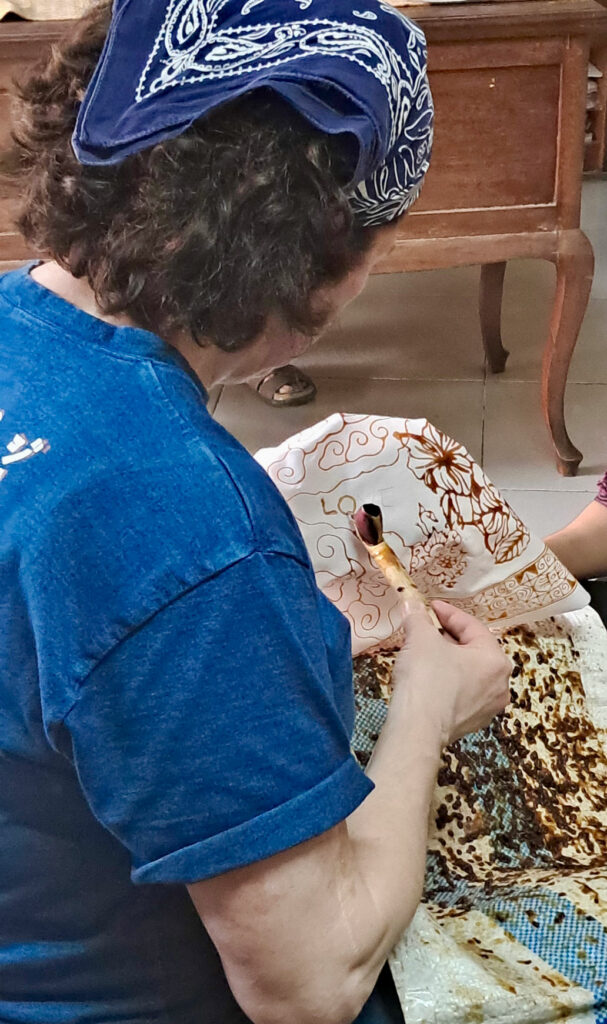
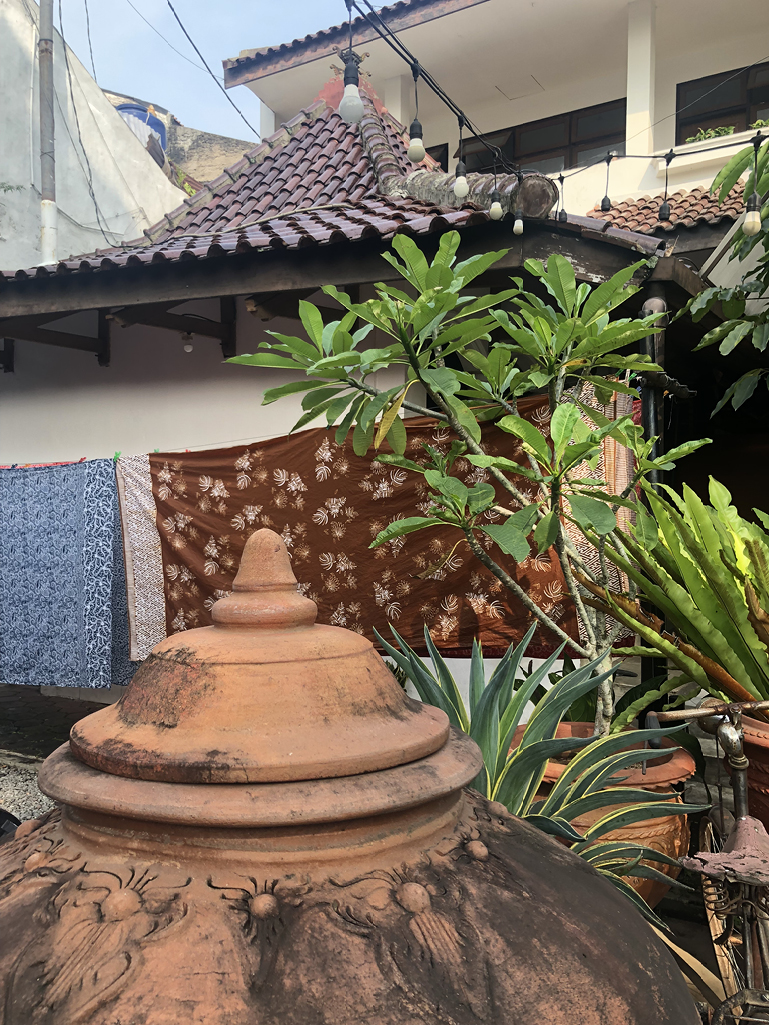
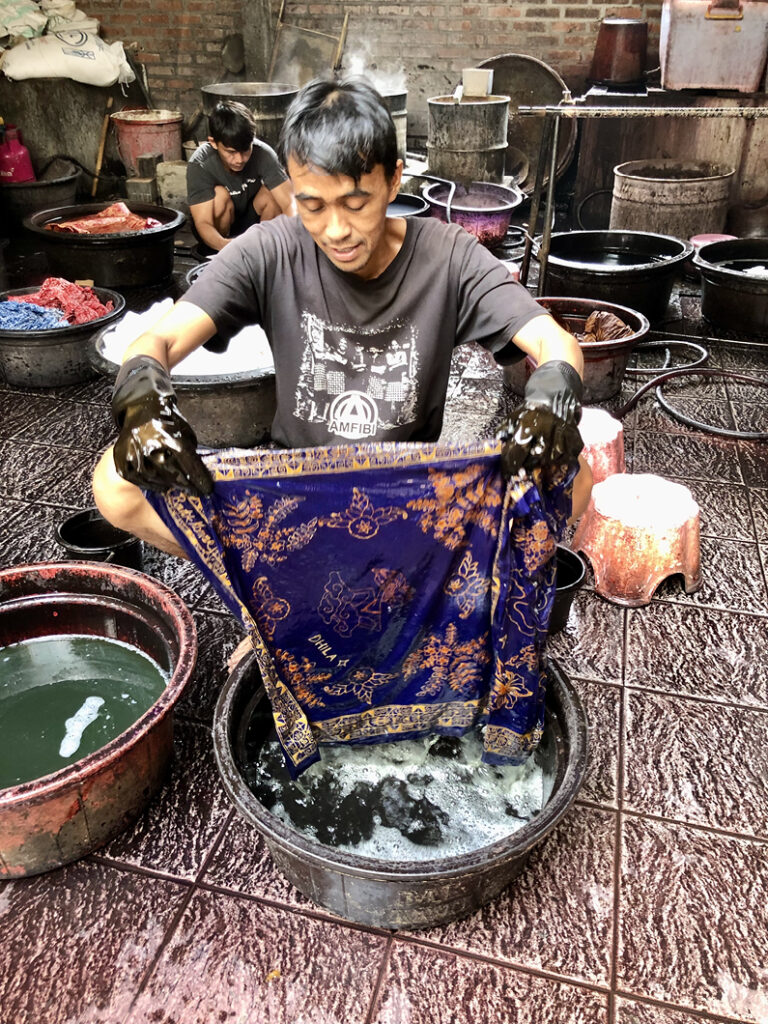
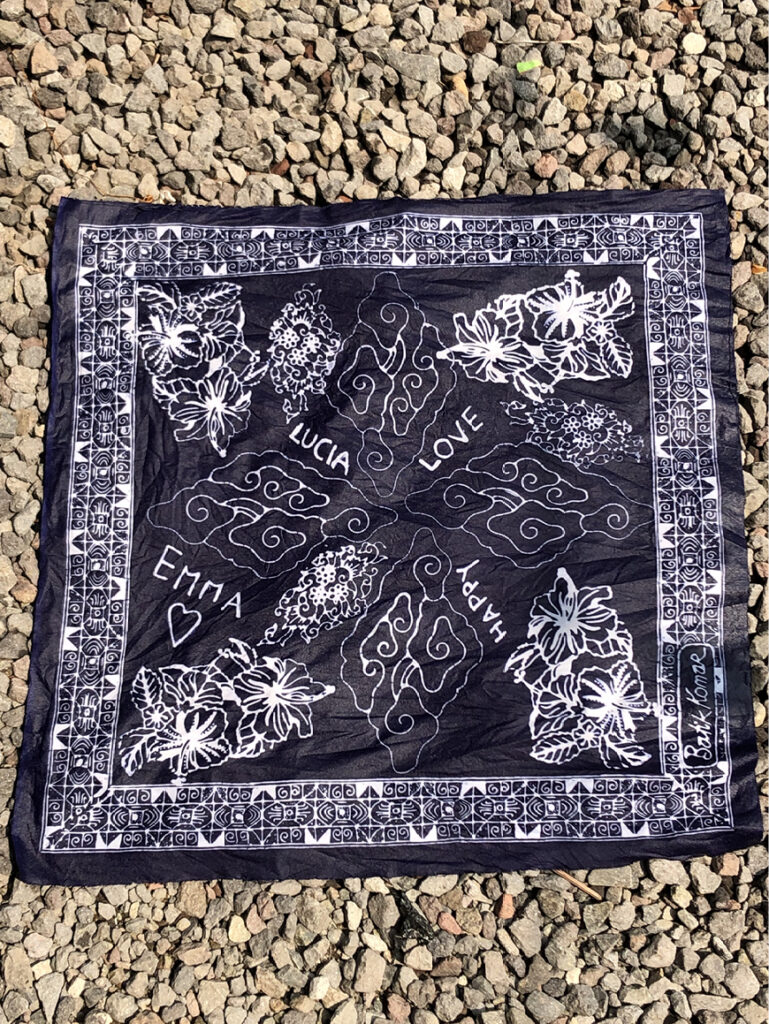
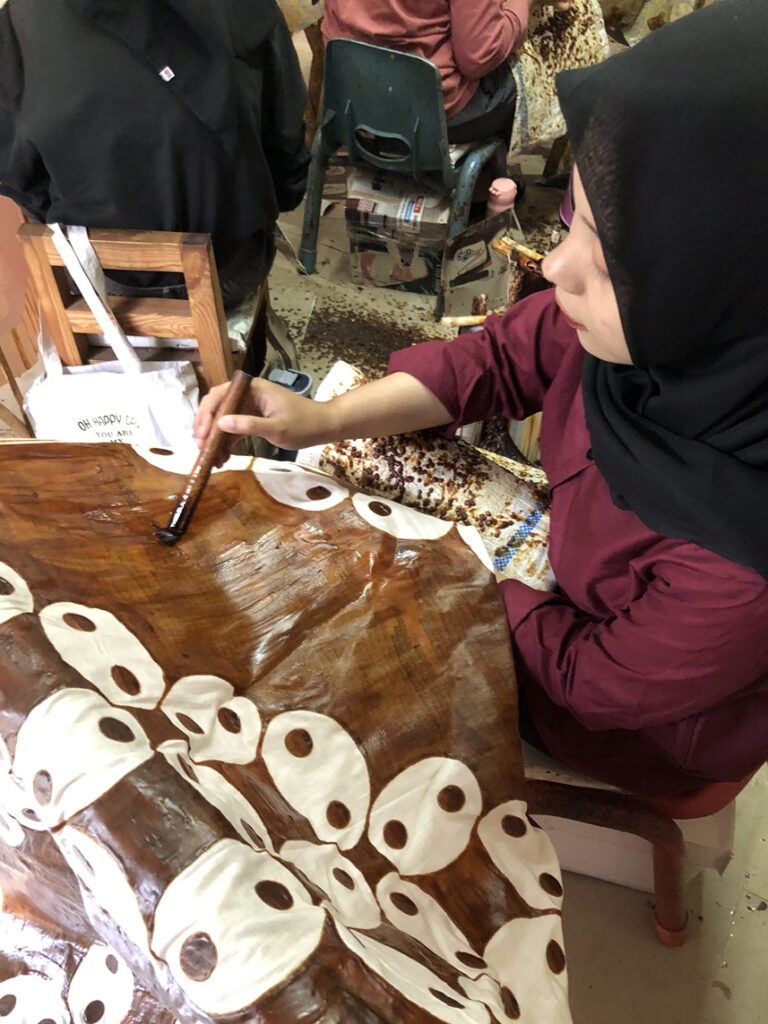
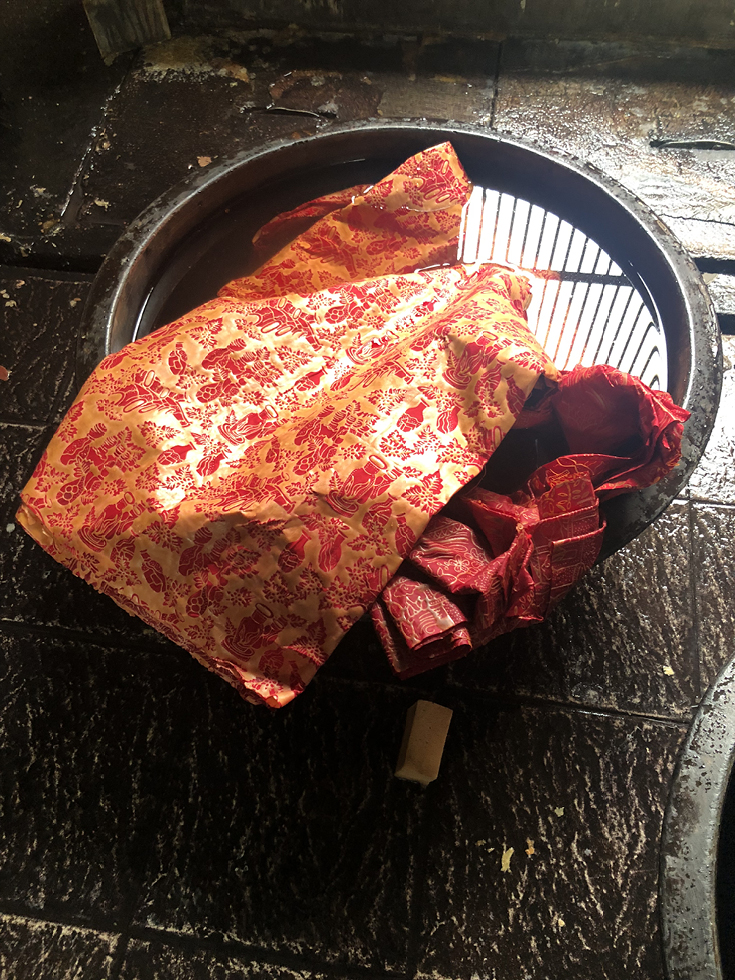
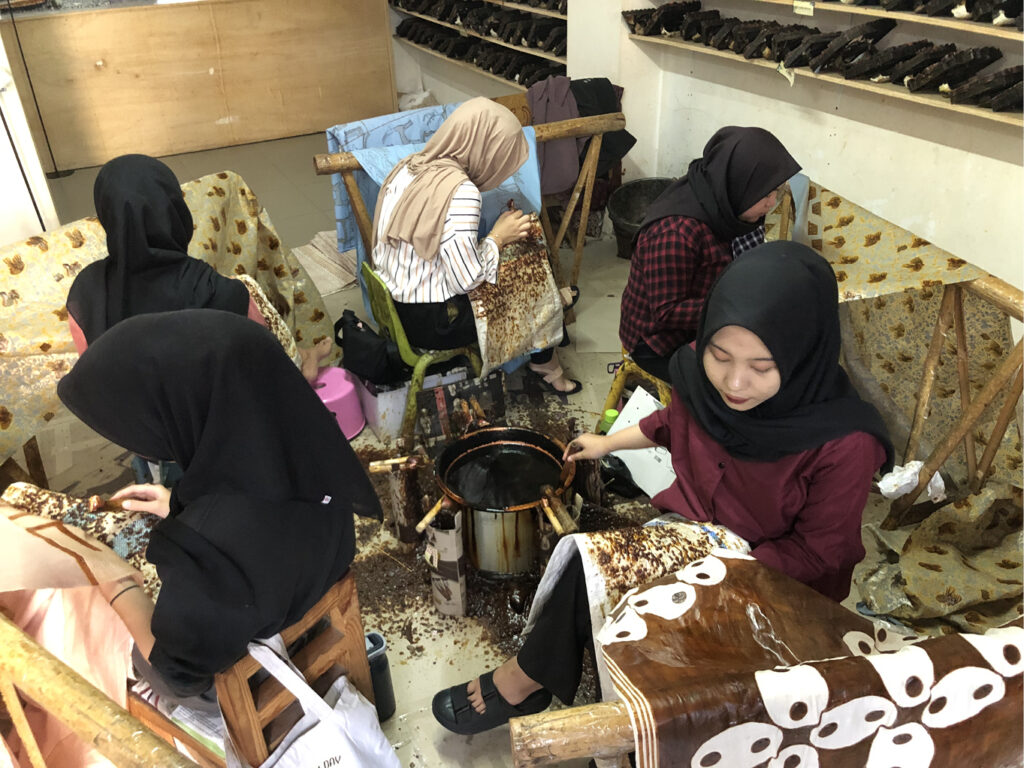
Lucia Rosin at “Rumah Batik Komar”: Batik workshop
Clothing as a mirror of the self
The forceful entry of batik and other artisanal techniques into the fashion industry, such as hand weaving, shibori and tye-dye, is not a passing trend, but an evolutionary necessity. In an increasingly immaterial future, clothing becomes the last bastion of our physicality and our history. Choosing a garment created from wax and hand-dyed dye means choosing to stand out, to stop time, and to finally wear something authentically human.